
Why Commercial Kitchen Cleaning Failures Keep Surprising Even Well-Managed Facilities
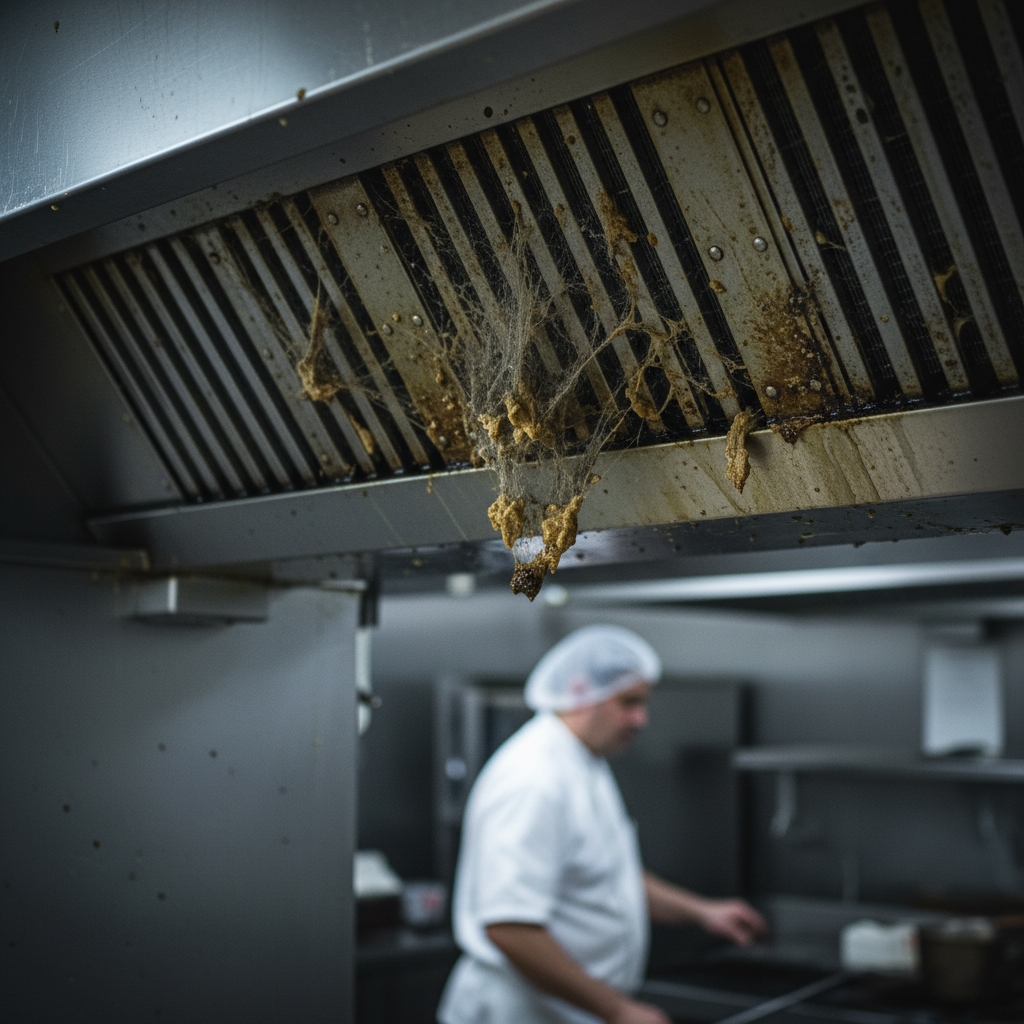
Commercial kitchen cleaning is one of the most underestimated compliance responsibilities that medium and large businesses in the GTA face — and in 2026, health inspectors are not slowing down. Most facility managers believe that routine mopping and surface wiping is enough to keep their kitchens inspection-ready. It rarely is. The violations that shut down operations, trigger fines, and damage reputations are not usually the obvious ones. They are the grease buildup behind a fryer that nobody scheduled, the floor drain in Mississauga that has not been cleared in months, or the exhaust hood that looks clean from the ground but is coated in a fire hazard above the filters.
At Green Maples Environmental Inc, we have worked with corporate office buildings, food service facilities, and large commercial properties across Mississauga, Brampton, Oakville, and the broader GTA. What we see repeatedly is the same pattern: facilities that maintain a surface-level cleaning routine while the real compliance risks accumulate in places nobody is looking. This article is our attempt to change that.
⚡ QUICK ANSWER
The most common hidden commercial kitchen violations involve grease accumulation in exhaust systems, improperly maintained floor drains, missed deep-cleaning cycles for equipment interiors, and inadequate sanitation documentation. These are consistently cited by public health inspectors across Ontario and can result in immediate closure orders. A structured, professionally managed cleaning program — not just daily surface cleaning — is the only reliable way to stay compliant.
What Do Health Inspectors Actually Look For That Most Facilities Miss?
Health inspectors in Ontario are trained to find exactly what your in-house cleaning team is not trained to address. The most frequently cited violations during commercial kitchen inspections are not spills on counters or dirty dishes — they are systemic failures in deep sanitation that have built up over time.
According to Toronto Public Health, grease accumulation in ventilation hoods and ductwork is one of the leading causes of commercial kitchen fire hazards and one of the top triggers for health code violations in the city. Inspectors look above the hood filters, behind cooking equipment, underneath prep tables, and inside floor drain traps — areas that standard janitorial rotations almost never reach.
The Ontario Food Premises Regulation (O. Reg. 493/17) requires that all surfaces, equipment, and facilities in a food premises be kept clean and in a sanitary condition at all times. That word — all — is intentional. It means the backs of shelving units, the gaskets on walk-in cooler doors, the legs of prep stations, and the grout lines in kitchen flooring are all fair game for inspection. Most facilities fail not because they are careless, but because their cleaning scope was never designed with compliance in mind.
“A clean kitchen is not just about what you can see — it is about what a trained inspector knows to look for. The violations that close businesses are almost always the ones that accumulated in overlooked spaces over months, not days.”
The Five Hidden Zones That Trigger the Most Violations
Based on our experience servicing corporate facilities across Mississauga and the GTA, the following five areas are consistently missed by general cleaning programs and consistently flagged by inspectors:
| Hidden Zone | Common Violation Found | Recommended Cleaning Frequency | Risk Level |
|---|---|---|---|
| Exhaust hood & ductwork | Grease buildup, fire hazard | Quarterly minimum (monthly for high-volume) | Critical |
| Floor drains | Odour, blockage, pest attraction | Monthly deep clean, weekly flush | High |
| Walk-in cooler door gaskets | Mould, bacterial growth | Bi-weekly sanitization | High |
| Undersides of prep tables | Food residue, pest harborage | Weekly | Medium-High |
| Grout lines in kitchen flooring | Bacteria, mould, slip hazard | Monthly deep scrub | Medium |
Why Does Inadequate Documentation Fail Facilities Just as Often as Poor Cleaning?
Inadequate cleaning documentation is a compliance failure in its own right — inspectors in Ontario can and do issue violations when a facility cannot demonstrate that its sanitation schedule has been followed, even if the physical kitchen looks acceptable on the day of the inspection.
According to Health Canada’s food safety guidelines, food service operators are expected to maintain written cleaning schedules, sanitation logs, and records of who completed each task and when. This creates an auditable trail that protects your facility not only during routine inspections, but also in the event of a food safety complaint or illness investigation.
Most in-house teams — especially in large corporate facilities across Mississauga and Brampton — are not structured to maintain this level of documentation alongside their regular duties. The result is a paper trail full of gaps that inspectors notice immediately. Our team at Green Maples Environmental Inc provides detailed service records, task-specific completion logs, and compliance-ready reporting as a standard part of every commercial kitchen cleaning contract. Your records are always current, organized, and ready for review.
The Real Cost of a Failed Inspection
A single failed health inspection in Ontario can carry consequences that go far beyond a written warning. According to Ontario’s Health Protection and Promotion Act, medical officers of health have the authority to issue closure orders immediately when conditions present a risk to public health. For a corporate cafeteria, food court tenant, or facility kitchen serving hundreds of employees daily, even a 48-hour closure creates cascading operational and reputational damage that is difficult to quantify.
Beyond closures, repeat violations can trigger mandatory re-inspections, public posting of results, and in serious cases, prosecution under provincial food safety law. The financial cost of a professionally managed, fully compliant cleaning program is a fraction of what a single closure event costs in lost productivity, legal exposure, and brand damage.
How Does Green Commercial Cleaning Reduce Risk While Meeting Environmental Standards?
Green commercial cleaning is not a compromise between effectiveness and environmental responsibility — it is simply a smarter, more professional standard of cleaning that prioritizes both outcomes simultaneously. At Green Maples Environmental Inc, our approach to commercial kitchen sanitation uses Health Canada-approved, environmentally responsible cleaning agents that eliminate pathogens, cut through grease, and sanitize surfaces without leaving harmful chemical residues in food preparation areas.
This matters especially in corporate kitchen environments where staff handle food daily. Conventional cleaning products often leave chemical residues on prep surfaces, in floor drain traps, and on equipment interiors that can contaminate food and create their own health code concerns. Green commercial cleaning companies like ours are specifically equipped to select products that meet both food-safety and environmental criteria — a standard that general janitorial providers frequently cannot match.
Our environmental commitment is also reflected in how we approach waste handling, water usage, and product sourcing. As a company built on responsible facility management, we believe that sustainability and compliance are not separate goals — they reinforce each other. For businesses in Oakville, Brampton, and across the GTA that have made corporate sustainability commitments, choosing green commercial cleaning services for your kitchen operations is one of the most direct ways to demonstrate that commitment in daily practice.
We also recognize that different facilities have unique sanitation challenges. A corporate head office cafeteria in Mississauga serving 500 employees operates very differently from a smaller event kitchen servicing occasional functions. Our team designs cleaning protocols that are calibrated to your specific volume, equipment, and usage patterns — not a generic checklist applied uniformly to every client.
What Should a Professional Kitchen Cleaning Program Actually Include?
A professional kitchen cleaning program should include a tiered schedule of daily, weekly, and monthly tasks that together cover every surface, piece of equipment, and structural element in the kitchen environment — not just the visible work areas. This is the operational foundation that separates a cleaning program designed for compliance from one designed simply to look clean.
At Green Maples Environmental Inc, our commercial kitchen programs typically include the following scope of work across three service tiers:
Daily Service: Surface sanitization of all prep counters and food contact surfaces, degreasing of cooking equipment exteriors, cleaning and disinfection of sinks and faucets, mopping and disinfection of kitchen floors, waste removal, and spot cleaning of walls and splash zones.
Weekly Deep Cleaning: Interior cleaning of ovens, fryers, and other cooking equipment, degreasing of hood filters, scrubbing of floor grout lines, sanitization of walk-in cooler and freezer interiors, cleaning behind and underneath all major equipment, and drain flushing.
Monthly and Quarterly Services: Full exhaust system degreasing, floor drain deep cleaning (particularly important for facilities in Mississauga where older drain systems can accumulate sediment), pressure washing of kitchen floors and loading areas where applicable, and comprehensive compliance documentation review.
This is the standard we hold ourselves to across every facility we service — whether it is a large corporate dining room, a multi-floor office building with a commercial kitchen, or a public-sector facility. Our broader facility management services extend this same philosophy of compliance-first, environmentally responsible care to every corner of your property.
How Does Kitchen Sanitation Connect to Your Broader Facility Health Strategy?
Your commercial kitchen does not exist in isolation — its cleanliness and compliance status is directly connected to the health and safety of your entire facility. The same grease, moisture, and food waste that creates kitchen violations can travel through shared HVAC systems, affect adjacent areas, and attract pests that move through entire buildings.
For corporate and institutional facilities across the GTA, we think about kitchen cleaning as one integrated component of a whole-building sanitation strategy. This is why we also offer services that touch every part of your facility — from washrooms and lobbies to loading docks and specialized areas. For organizations that serve diverse communities, such as non-profits and social service facilities, we bring that same professionalism to their unique environments through our Non Profit Organizations Cleaning Services In Ontario. For transit hubs and public facilities with commercial food service spaces, our work also extends to Public Transportation Cleaning — environments where sanitation standards are equally rigorous and equally high-stakes.
The point is this: kitchen compliance is not a standalone checkbox. It is a signal of how seriously a facility takes the health and safety of everyone who works, eats, and operates within it. Our team brings that level of seriousness to every engagement, because we understand what is at stake for your people, your brand, and your license to operate.
Is Your Commercial Kitchen Inspection-Ready?
If you are not certain that every zone in your kitchen meets Ontario’s health code standards, now is the time to find out — before an inspector does. Our team at Green Maples Environmental Inc provides comprehensive kitchen cleaning assessments and ongoing compliance programs for medium and large facilities across Mississauga, Oakville, Brampton, and the GTA. Let us build a program around your facility, your schedule, and your compliance requirements.
✍️ Written by the Green Maples Environmental Inc Team
Green Maples Environmental Inc is a Mississauga-based commercial cleaning and facility management company serving medium and large businesses across the GTA. With a deep commitment to environmental responsibility and regulatory compliance, our team brings professional-grade sanitation programs to corporate offices, industrial facilities, and institutional properties throughout Ontario.
Frequently Asked Questions
How often should a commercial kitchen be professionally deep cleaned?
A commercial kitchen should receive a professional deep clean at minimum once per month, with quarterly exhaust and ductwork cleaning for standard-volume kitchens and monthly deep cleaning for high-volume food service operations. Daily and weekly surface sanitation should occur in between, but these do not replace the thoroughness of a scheduled professional service. Facilities in the GTA should also align their deep-cleaning cycles with the Ontario Food Premises Regulation to ensure documentation is always current for inspection purposes.
What are the most common health code violations in commercial kitchens in Ontario?
The most commonly cited violations in Ontario commercial kitchens include grease accumulation in exhaust hoods and ductwork, improperly maintained floor drains, mould in walk-in cooler gaskets, inadequate sanitation logs and documentation, and pest harborage in equipment undersides and floor grout lines. Many of these violations are invisible to a casual inspection but are immediately visible to a trained public health inspector. Addressing them requires a professionally designed cleaning scope — not routine janitorial work alone.
Why should I choose green commercial cleaning companies over conventional cleaning services for my kitchen?
Green commercial cleaning companies use Health Canada-approved, environmentally responsible products that eliminate pathogens without leaving harmful chemical residues on food contact surfaces — a critical distinction in kitchen environments. Conventional cleaning products can contaminate prep surfaces and create secondary health code concerns. Beyond food safety, choosing an environmentally focused provider aligns with corporate sustainability commitments and reduces your facility’s overall chemical exposure. At Green Maples Environmental Inc, our environmental standards are built into every kitchen cleaning protocol we deliver.
Can I use the same janitorial service for my kitchen as the rest of my facility?
You can, but only if that janitorial provider has specific training, equipment, and product certification for commercial kitchen sanitation — which many general cleaning companies do not. Kitchen environments require food-safe sanitizing agents, specialized degreasing equipment, compliance documentation, and staff trained in Ontario food premises regulations. At Green Maples Environmental Inc, we provide integrated facility cleaning programs that include both general janitorial services and fully compliant kitchen cleaning, so your entire property is covered under one accountable, professional team.