
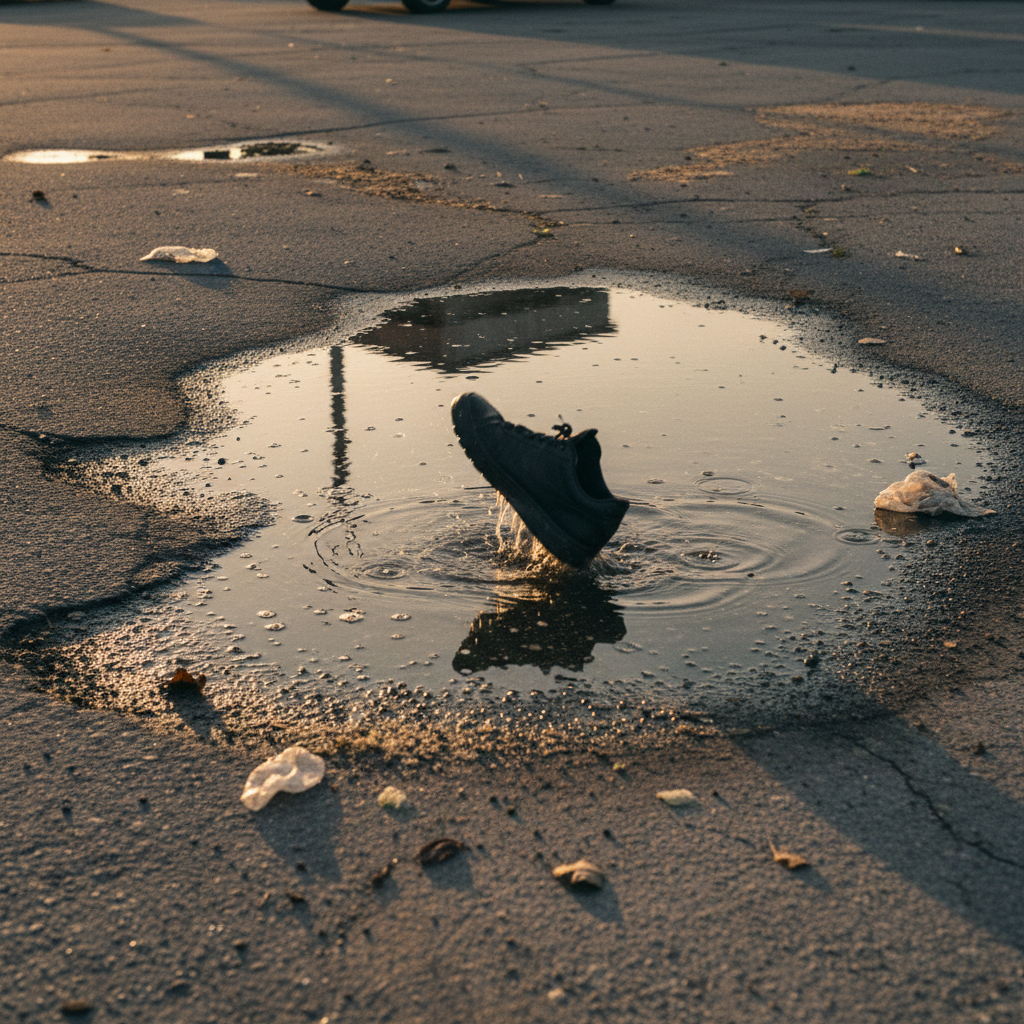
Your Parking Lot Is Either Protecting You or Exposing You — There Is No Middle Ground
Parking lot cleaning is one of those facility maintenance tasks that businesses across the GTA consistently push to the bottom of the priority list — right up until something goes wrong. A slip-and-fall in front of a Mississauga office building. A drain backup that floods a Brampton parking structure. A grease-slicked surface that a property insurer flags during a routine inspection. Suddenly, what felt like a low-stakes janitorial line item becomes a very expensive legal and coverage conversation.
In 2026, the cost of premises liability claims in Canada continues to climb. According to the Insurance Bureau of Canada, slip-and-fall incidents account for a significant portion of commercial general liability claims filed each year — and property owners who cannot demonstrate a documented maintenance program are in a substantially weaker position when those claims are contested. That is not a hypothetical risk. That is the current reality for medium and large businesses operating in Ontario.
At Green Maples Environmental Inc, we work with corporate facilities teams throughout Mississauga, Brampton, Oakville, and the broader GTA every day. We see firsthand which properties are managing their exterior surfaces proactively — and which ones are quietly accumulating liability exposure with every week that passes without service.
⚡ QUICK ANSWER
Neglected parking lots — those with oil stains, pooled water, debris buildup, and deteriorating surfaces — directly increase a business’s exposure to slip-and-fall liability claims and can affect commercial insurance coverage. Regular professional cleaning, including commercial power washing and documented maintenance records, is one of the most defensible steps a property owner can take to demonstrate due diligence to insurers, lawyers, and regulators.
Why Does Parking Lot Condition Actually Matter to Your Insurer?
Your insurer cares about your parking lot because it is legally part of your premises — and you are responsible for what happens on it. The standard of care that Ontario courts apply to property owners and occupiers under the Occupiers’ Liability Act requires that reasonable steps be taken to keep visitors reasonably safe. A dirty, poorly maintained parking surface is not a “reasonable” condition. It is a documented hazard.
When a claim is filed, your insurer’s first question is almost always: “What maintenance records do you have?” If the answer is “we sweep it occasionally,” that is a very different conversation than presenting quarterly commercial pressure washing logs, drain cleaning records, and surface inspection reports. Documentation is not just good housekeeping — it is your legal defence.
According to WorkSafeBC’s research on slip, trip and fall prevention — findings that are widely cited across Canadian occupational health frameworks — contaminated walking and driving surfaces are among the leading contributors to preventable workplace and premises injuries. Oil, standing water, organic debris, and chemical residue all reduce traction and increase the likelihood of an incident. These are not edge cases. They are everyday conditions on unmanaged commercial lots across Mississauga and the GTA.
“A documented, scheduled cleaning program is one of the most cost-effective risk management tools available to commercial property owners — far cheaper than a single contested liability claim.”
Insurance underwriters are also increasingly factoring property maintenance standards into renewal assessments. A facility in Brampton or Oakville that presents clean, well-maintained exteriors with service records is a materially lower risk profile than one that cannot account for its last exterior cleaning cycle. That difference can affect premiums. In some cases, it can affect whether coverage is offered at all.
What Are the Real Hazards Hiding in a Neglected Parking Lot?
The hazards in a poorly maintained commercial parking lot are more varied than most facilities managers initially consider. Oil and fluid leaks from vehicles are among the most common — motor oil, transmission fluid, and coolant create slick, invisible films that are nearly impossible to see in wet weather or low light. These are not cosmetic issues. They are the exact surface conditions that personal injury lawyers photograph at the scene of a fall.
Surface Contamination and Traction Loss
Organic debris — leaves, algae growth, moss — accumulates in shaded or damp areas of parking structures and open lots alike. When wet, these materials become genuinely treacherous walking surfaces. In Ontario’s climate, freeze-thaw cycles can bond debris into the pavement itself, creating uneven texture and accelerating surface deterioration. Our team regularly treats parking surfaces across Mississauga and the surrounding region where years of accumulated contamination have embedded into the substrate — situations that require professional-grade commercial power washing equipment to address properly.
Blocked Drains and Water Pooling
Clogged drainage systems turn surface water into pooling hazards — and in parking structures, they can cause serious structural damage over time. Our drain cleaning services in Mississauga specifically address the kind of debris and sediment buildup that develops when lots go without professional attention for extended periods. Standing water is not just a slip risk on its own. It also masks other surface hazards — broken pavement, oil patches, debris — that pedestrians cannot see until it is too late.
Graffiti and Vandalism as a Liability Signal
It might seem unrelated, but visible graffiti and vandalism on parking structures signals to both insurers and regulators that a property is not being actively monitored or maintained. For facilities in higher-traffic urban areas near Toronto, this matters. A property that looks neglected invites further neglect — and it tells insurers a story about overall maintenance culture that can influence underwriting decisions. Professional graffiti removal is part of a complete exterior maintenance program for this reason.
How Does Professional Pressure Washing Actually Reduce Liability Exposure?
Professional pressure washing reduces liability exposure by physically removing the surface conditions that create injury risk — and by generating the service documentation that protects property owners when claims are filed. These two outcomes are equally important, and neither happens reliably with in-house sweeping or ad-hoc cleaning approaches.
When our team performs commercial pressure washing on a parking lot or structure — whether in Oakville, Brampton, or Mississauga — we are not simply moving surface dirt around. We are using calibrated hot-water pressure systems with appropriate degreasers to break down and extract oil, chemical residue, and biological matter from the pavement surface itself. The result is a measurably cleaner, higher-traction surface that performs differently in wet conditions. That is not a marketing claim — it is physics.
From a liability standpoint, the documentation generated by scheduled professional service is the other half of the equation. Every service visit produces a record: the date, the scope, the conditions observed, and the work performed. If a claim is ever filed, that paper trail demonstrates that the property owner took a reasonable, proactive approach to hazard management. Courts and insurers respond to demonstrated due diligence. A folder of service records is worth more in a liability defence than almost any other single document.
Our green commercial cleaning services are also designed with environmental compliance in mind — our pressure washing operations use environmentally responsible water capture and disposal methods that comply with municipal stormwater regulations across Ontario. This matters because regulators in Mississauga and the broader GTA are paying increasing attention to commercial runoff from pressure washing operations. Facilities that use non-compliant service providers can face municipal fines on top of their other liability exposure.
What Should a Complete Parking Lot Maintenance Program Include?
A complete parking lot maintenance program includes regular surface cleaning, drainage maintenance, post-incident response capability, and structured documentation — not just an annual deep clean and a hope that nothing happens in between. Liability protection comes from consistency, not intensity.
Here is how we typically structure exterior parking maintenance programs for medium to large commercial facilities in the GTA:
| Service Component | Recommended Frequency | Primary Liability Benefit | Applicable Location Types |
|---|---|---|---|
| Commercial pressure washing (surface) | Quarterly minimum; monthly for high-traffic lots | Removes oil, debris, traction hazards | Open lots, parking garages, loading areas |
| Drain cleaning and inspection | Bi-annually; pre-winter and post-spring essential | Prevents pooling, flooding, freeze hazards | All exterior and structured parking facilities |
| Parking garage interior cleaning | Monthly to quarterly depending on vehicle volume | Controls fluid buildup, maintains signage visibility | Multi-level parking structures, commercial buildings |
| Post-event and post-construction cleaning | As-needed within 48–72 hours of event or build | Removes acute hazards before public re-access | Event venues, construction sites, mixed-use facilities |
| Graffiti removal | Within 24–48 hours of discovery | Maintains property presentation; signals active management | Urban facilities, transit-adjacent properties, garages |
Post-construction cleaning deserves specific mention here. When renovations or builds are completed at a facility in Brampton or elsewhere in the GTA, parking areas frequently accumulate construction debris, concrete dust, and chemical runoff that are not visible to the untrained eye — but are absolutely detectable by an insurer or a personal injury lawyer conducting a site inspection after an incident. Our post-construction cleaning and post-renovation cleaning protocols are specifically designed to restore exterior surfaces to a safe, documented condition before the space is reopened to employees and visitors.
We also provide event cleaning services for corporate facilities and community venues — because the period immediately following a large event is when parking surfaces are at their most contaminated and their most legally vulnerable. Spilled food and beverages, vehicle fluid drips, and compressed debris all become liability factors the moment the next visitor sets foot on that surface.
Our broader service portfolio — which includes everything from green commercial cleaning across GTA office facilities to Public Transportation Cleaning — is built on the same foundational principle: consistent, documented, professional maintenance is the only approach that holds up under legal and regulatory scrutiny.
Is Green Commercial Cleaning Compatible With Regulatory Compliance in Ontario?
Green commercial cleaning is not just compatible with Ontario regulatory compliance — in many cases, it is the only approach that fully satisfies municipal stormwater and environmental requirements. Ontario’s stormwater management regulations specifically govern how commercial cleaning operations manage runoff, and traditional high-volume pressure washing without proper containment can put property owners offside with their local municipality.
At Green Maples Environmental Inc — GME — our green commercial cleaning approach uses biodegradable, environmentally certified cleaning agents and closed-loop or contained water recovery systems where required. This protects our clients from municipal compliance issues while delivering the same surface performance outcomes as conventional methods. For businesses in Mississauga and across the GTA that have sustainability commitments or ESG reporting requirements, this approach also contributes to documentable environmental performance metrics.
This matters for the liability conversation in a less obvious but equally important way: regulators and insurers are increasingly evaluating not just whether a facility was cleaned, but how. A cleaning event that results in chemical runoff into a storm drain can trigger an environmental compliance order — adding a regulatory liability layer on top of any slip-and-fall exposure. Our team eliminates that risk as part of every service engagement.
We are proud to extend these standards to a wide range of facility types, including Non Profit Organizations Cleaning Services In Ontario — because every facility, regardless of sector, deserves professional-grade, compliant exterior maintenance.
“Green cleaning methods are not a compromise — they are the professional standard for facilities that take both liability management and environmental responsibility seriously.”
The bottom line is straightforward: parking lot and parking garage maintenance in Ontario is not optional from a liability standpoint, it is not cost-effective to defer, and it is not something that an untrained in-house team with a consumer-grade pressure washer can accomplish to the standard that insurers and courts expect. The facilities across Mississauga, Oakville, Brampton, and the GTA that manage this proactively — with documented, professional service programs — are the ones that survive claims and inspections intact.
For more information about our full range of facility and exterior maintenance services, visit Www.Gmecanada.Ca or reach out to our team directly to discuss a tailored maintenance program for your property.
Ready to Protect Your Property and Your Coverage?
Don’t wait for a slip-and-fall claim or an insurer’s inspection to discover what your parking lot has been hiding. At Green Maples Environmental Inc, our team serves medium and large businesses across Mississauga, Brampton, Oakville, and the GTA with professional, documented, and environmentally responsible exterior maintenance programs. Let’s build a maintenance schedule that protects your people, your property, and your coverage.
✍️ Written by the Green Maples Environmental Inc Content Team — Our team of facility maintenance professionals has served commercial and corporate clients across the GTA for years, specializing in compliant, documented, and environmentally responsible janitorial and exterior cleaning programs. We write what we know because we do this work every single day.
Frequently Asked Questions
How often should a commercial parking lot be professionally cleaned?
For most medium to large commercial facilities in the GTA, quarterly professional pressure washing is the minimum recommended frequency — but high-traffic lots, parking garages, or properties adjacent to food service operations may require monthly service. The determining factors are vehicle volume, the nature of adjacent business activity, and your municipality’s drainage compliance requirements. From a liability standpoint, the more frequently a lot is serviced and documented, the stronger your due diligence defence becomes.
What types of hazards does commercial power washing actually remove?
Professional commercial power washing removes motor oil, transmission fluid, coolant, algae, moss, tire rubber residue, organic debris, and chemical contaminants from parking surfaces. These materials reduce surface traction and are the primary contributors to slip-and-fall incidents on commercial lots. Hot-water pressure washing systems combined with appropriate degreasers penetrate the pavement surface rather than simply displacing surface-level debris, which is why professional service produces meaningfully different results than standard sweeping or consumer-grade pressure washing.
Why does my insurer care about parking lot maintenance records specifically?
Insurers care about maintenance records because they are the primary evidence of reasonable care under Ontario’s Occupiers’ Liability Act. When a slip-and-fall claim is filed, the insurer’s defence hinges on whether the property owner took reasonable steps to identify and address hazards. A documented service record demonstrates proactive maintenance and substantially weakens the claimant’s argument that the hazard was known and ignored. Without records, even a property that was regularly cleaned has difficulty proving it in litigation.
Can I handle parking lot cleaning with in-house staff instead of a professional service?
In-house staff can handle routine litter pickup and surface sweeping, but they typically lack the commercial-grade equipment, training, and environmental compliance knowledge required to adequately address oil contamination, drain maintenance, or high-pressure surface restoration. From a liability and regulatory standpoint, the standard expected of commercial property owners in Ontario is one that professional service providers are better equipped to document and consistently meet. Attempting to substitute in-house sweeping for professional exterior cleaning is one of the most common gaps our team identifies when onboarding new clients across Mississauga and the GTA.